

Water Safety Patch Program®
Original price was: $0.99.$0.75Current price is: $0.75.
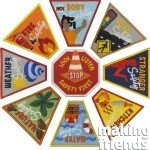 Equip your Girl Scouts with life-saving skills with the Water Safety Patch Program®! Designed to address aquatic safety in a age-appropriate way, this curriculum guides younger scouts through foundational pool rules and reaching assists, while challenging older girls to navigate open-water hazards, recognize the silent signs of drowning, and confidently handle peer pressure around water.
It is part of our Safety First Patch Program® group.
In stock
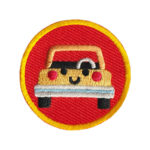
Iron on! 2″ Embroidered Patch.

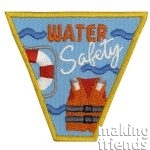
Suggestions for Younger Girl Scouts to Earn The Water Safety Patch Program®
1. Water Safety Starts with Knowing the Rules
Watch a kid-friendly video to understand the foundational rules of being around water—like never swimming alone and always asking an adult for permission before going near a pool, lake, or beach.
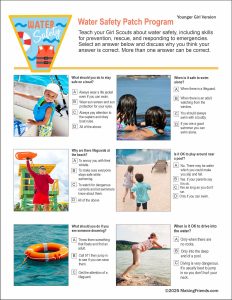
2. Complete the Water Safety Worksheet
Print the water safety worksheet from your order confirmation or download it from your account. Read through each scenario with your girls and discuss the options provided.
Encourage your girls to think about what they would do if a toy fell into the deep end or if a friend jumped in without a life jacket.
3. The “Look Before You Leap” Rule
Discuss the importance of checking your surroundings. How do you know if water is deep or shallow? What hidden dangers might be under the surface of a lake or river (rocks, branches, currents)? Practice saying out loud: “I always check with a grown-up and look at the water before I get in.”
4. The Personal Life Jacket (PFD)
Use a life jacket or PFD (Personal Flotation Device) to demonstrate proper fitting. Discuss when you are required to wear one (boating, docks, or if you aren’t a strong swimmer yet). Practice bucking it up and checking that it fits snugly by pulling up on the shoulders.
5. Learn and Practice How to Handle Unwanted or Unsafe Situations
- The Power Voice (No Dunking): Practice using a firm, clear “Power Voice” if someone is playing too rough in the pool. Roleplay making direct eye contact, holding up a stop-hand gesture, and saying loudly and clearly: “Stop,” “Don’t push me,” or “I need my space.”
- “Reach or Throw, Don’t Go”: Practice what to do if a friend is struggling in the water. Never jump in to save them, as they might accidentally pull you under. Practice the rule of reaching out with a pool noodle, a broom handle, or throwing a floaty/towel while yelling for an adult.
- Roleplay Scenarios: In pairs or a troop setting, safely roleplay real-world scenarios. Examples: A friend dares you to run on a slippery pool deck; someone asks you to swim in an area marked “No Lifeguard on Duty”; a pet jumps into a pond and looks like it’s struggling.
Suggestions for Older Girl Scouts to Earn The Water Safety Patch Program®
As you get older, water activities become more complex and independent. Hazards aren’t just about slipping on a pool deck—they involve managing peer pressure at beach parties, understanding open-water currents, recognizing the signs of active drowning, and knowing your personal swimming limits.
1. Watch Water Safety for Teens
Watch an educational video covering the differences between swimming in a pool versus open water, focusing on how to spot rip currents, handling sudden temperature drops, and resisting dangerous peer pressure around water heights (like bridge or cliff jumping).
2. The Science of Aquatic Danger (The Silent Threat)
Drowning isn’t mystical or loud—it is actually a rapid, silent physiological response. Media often portrays drowning as splashing and screaming, but the nervous system takes over to prioritize breathing, making it impossible for a struggling swimmer to call for help.
When you are around water, pay close attention if you notice someone showing these physical signals:
- The Silence: Hyperventilating or gasping, with the mouth sinking below and reappearing above the water line without time to speak.
- The Ladder Climb: Arms extended laterally, pressing down on the water to lift the mouth up, appearing as though they are trying to climb an invisible rope or ladder.
- The Vertical Freeze: Floating vertically in the water without supportive kicking or moving, often with eyes glassy, closed, or unfocused.
Overriding the “Politeness Trap”
Teenagers are often socially conditioned to stay quiet to avoid “ruining the fun” or making a scene if a friend jumps into a fast-moving river or deep quarry. Your safety and your friends’ lives will always be more important than someone else’s feelings. If a situation feels dangerous or beyond your skill level, speak up immediately or get a professional.
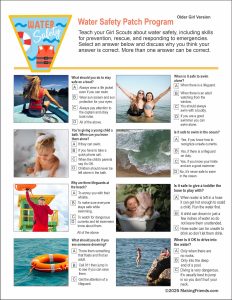
3. Complete the Water Safety Worksheet
Print the water safety worksheet from your order confirmation or download it from your account.
Read through each scenario with your girls and discuss the options provided. There may be more than one correct answer.
💡 Leader Note on Safety & Sensitivity
When facilitating this patch program, always emphasize that water accidents can happen to anyone, regardless of how strong a swimmer they think they are. Ensure a non-judgmental space where girls can honestly share their comfort levels with swimming and water activities.




Reviews
There are no reviews yet.