

Stranger Safety Patch Program®
Original price was: $0.99.$0.75Current price is: $0.75.
 This patch program helps girls understand that a stranger can seem very friendly and can actually be someone your family knows but not that well and how to keep their personal information private online.
It is part of our Safety First Patch Program® group.
In stock
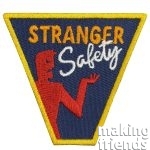
Iron on! 2″ Embroidered Patch.

Due to the sensitive nature of this topic, we recommend that parents be included. We suggest informing parents before the meeting, inviting them to attend, or providing them with the downloadable worksheets and the video links so they can actively participate.
Suggestions for Younger Girl Scouts to Earn The Stranger Safety Patch Program®
1. Recognizing True “Safety Adults” vs. Strangers
This video explains how people you don’t know well can seem very friendly but still be strangers you need to watch out for.
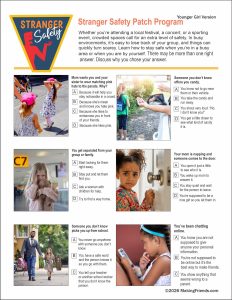
2. Complete the Stranger Safety Worksheet
Print the stranger safety worksheet from your order confirmation or download it from your account.
Read through each scenario with your girls and discuss the options provided. There may be more than one correct answer. Encourage your girls to come up with their own responses.
The Concept: A stranger is simply anyone your family doesn’t know well. They aren’t always mean-looking or scary; they can look friendly, have nice pets, or ask for help.
Discussion: Talk about the difference between a stranger and a Safety Adult (like a police officer, a store clerk with a nametag, or a teacher) you can approach if you ever get lost.
3. Body Signals
Discuss how your body reacts when something feels wrong. Do you get butterflies in your tummy? Does your heart beat fast? That is your body’s built-in alarm system.
Have the girls practice saying out loud: “I need to check with my adult first!” Make it a rule to always ask a parent or guardian before going anywhere, taking anything, or getting into a car with anyone.
4. Smart Online Safety
Keep Secrets Safe: Never tell an online game character or avatar your real name, your school, what town you live in, or your age.
The Screen Stop: If someone online asks you to send a picture, or says something that gives you the “Uh-Oh” feeling, immediately close the screen or turn the device over and tell an adult.
5. Practice Your “Power Actions”
No, Go, Yell, Tell: Roleplay four simple steps if a stranger approaches them at a park or on the street:
- NO: Say “No!” in a loud, firm voice.
- GO: Run away quickly toward a safe area or a Safety Adult.
- YELL: Yell loudly so others can hear: “This is not my parent!” or “Help!”
- TELL: Tell a trusted adult exactly what happened right away.
Suggestions for Older Girl Scouts to Earn The Stranger Safety Patch Program®
As you grow more independent, how you manage your personal safety changes. “Strangers” aren’t just people on the street—they are also individuals who try to bypass your digital boundaries, spam your social media, or interact with you in public places when you are out with friends.
1. Watch Being Safe Online
This video breaks down the fact that people online aren’t always who they say they are, details the red flags of digital manipulation, and explains how to handle online interactions that cross lines into uncomfortable territory.
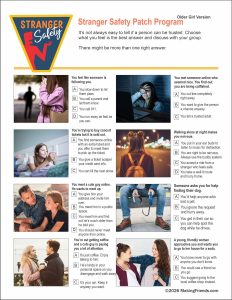
3. Complete the Stranger Safety Worksheet
Print the stranger safety worksheet from your order confirmation or download it from your account.
Read through each scenario with your girls and discuss the options provided. There may be more than one correct answer. Encourage your girls to come up with their own responses.
4. Deconstructing “Tricky Situations” & The Politeness Trap
The Trap: Older girls are often socially conditioned to be helpful, polite, and avoid making a scene. Disreputable people count on this.
The Rule: Your safety matters more than anyone else’s manners. If an adult you don’t know asks you for directions, asks you to come look at something, or makes persistent small talk that makes you uncomfortable, you have full permission to walk away, ignore them, or say “I can’t help you” and keep moving.
Situational Awareness (In Person)
- The Heads-Up Rule: When walking in public, navigating a mall, or waiting for a ride, keep your head up and eyes off your phone. Looking aware and confident makes you a much harder target.
- The Buddy System: Never walk away from a group or event alone. Agree with your friends ahead of time that you arrive together and leave together.
5. Digital Stranger Danger: Protecting Your Digital Footprint
- The Illusion of Anonymity: People online are not always who they say they are. A “14-year-old girl” in a gaming lobby or a comment section could easily be an adult stranger.
- Action Steps:
- Lock Down Privacy: Check your privacy settings on your gaming accounts and social platforms. Ensure strangers cannot see your location, school gear, or daily routines.
- The “Receipt” Test: Never send photos or information to anyone online that you wouldn’t want posted on a billboard in front of your school.
- The Stranger Filter: Treat friend requests or direct messages (DMs) from people you do not know in real life as a boundary cross. Block and report persistent or inappropriate accounts immediately.
5. Build Your Active “Safety Squad” & Emergency Codes
The Network: Identify 3 trusted adults who agree to be part of your safety network.
The X-Plan: Establish a secret code word or a specific emoji (like 🚫 or 🚗) with your parents or Safety Squad. If you text them this code, it means: “Call me right now with a fake emergency so I have an excuse to leave,” or “Come pick me up immediately, no questions asked.”
💡 Leader Note on Safety & Sensitivity
When hosting a Stranger Safety meeting, avoid using scare tactics that make girls afraid of the outside world. Instead, focus on empowerment, boundary-setting, and building a toolkit of actionable responses. Always emphasize that if an uncomfortable situation occurs, it is never the girl’s fault.







Reviews
There are no reviews yet.