
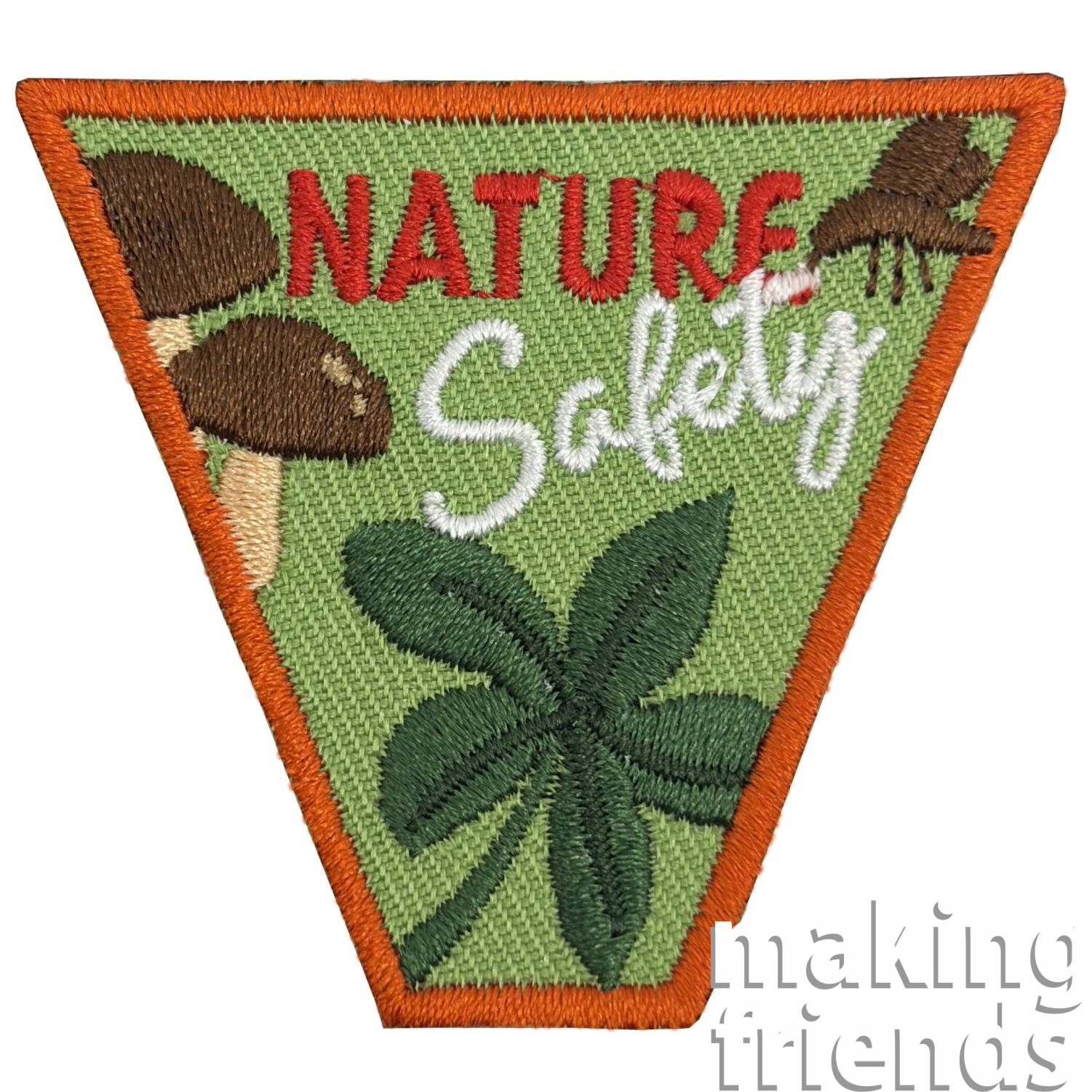
Nature Safety Patch Program®
Original price was: $0.99.$0.75Current price is: $0.75.
 This patch program helps girls prepare to be safe and respectful while interacting with nature.
It is part of our Safety First Patch Program® group.
Out of stock
Iron on! 2″ Embroidered Patch.

Suggestions for Younger Girl Scouts to Earn The Nature Safety Patch Program®
Earning this patch helps younger girls explore the great outdoors while learning how to stay safe, respect wildlife, and look out for one another.
1. Watch this video about staying safe outdoors.
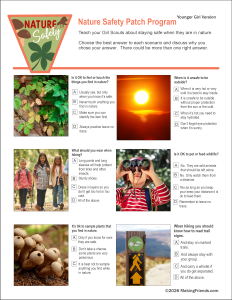
2. Complete the Nature Safety Worksheet
Print the nature safety worksheet from your order confirmation or download it from your account.
Read through each scenario with your girls and discuss the options provided. There may be more than one correct answer. Encourage your girls to come up with their own responses.
2. Buddy Up
The Rule: Always use the buddy system when exploring nature—never wander off alone. If you ever realize you are separated from your group, freeze like a tree, stay in one place, and blow your safety whistle or yell for help.
Activity: Pair the girls up into “Safety Buddies”. Play a game or go on a short walk where partners must stay within arm’s reach of each other the entire time. Practice yelling “Buddy Check!” where pairs must find each other and raise their hands.
3. Know the “Stay Put” Rule
The Rule: If you ever accidentally get separated from your buddy or the group, do not keep walking to look for them.
Activity: Teach the girls to “Freeze like a tree.” Practice standing in one place, blowing a safety whistle three times, or calling out loudly until a leader or adult finds them.
4. Respect Wildlife from a Distance
The Rule: Animals in nature are beautiful but wild. Never approach, feed, or try to touch any wildlife, no matter how small or cute they look.
The Thumb Trick: Teach the girls the “Rule of Thumb”: Hold your thumb out at arm’s length, close one eye, and try to cover the animal with your thumb. If you can still see the animal around your thumb, you are too close and need to take a few steps back!
5. Know Your Plants: “Leaves of Three, Let It Be”
The Rule: Some plants can cause itchy rashes or tummy aches. Never touch plants you don’t know, and never eat wild berries or mushrooms.
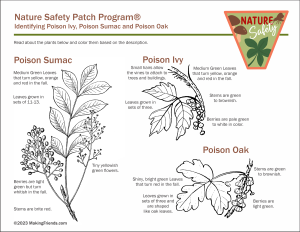
Activity: Download the worksheet with pictures of poison ivy, poison oak, and poison sumac. Have the girls read about them and color them. Have the girls practice chanting: “Leaves of three, let it be!“
Suggestions for Older Girl Scouts to Earn The Nature Safety Patch Program®
For older scouts, nature safety requires advanced preparation, situational awareness, and the skills to handle unexpected physical hazards on the trail.
1. Watch this video about staying safe outdoors.
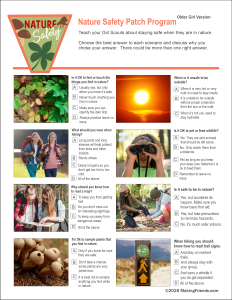
2. Complete the Nature Safety Worksheet
Print the nature safety worksheet from your order confirmation or download it from your account.
Read through each scenario with your girls and discuss the options provided. There may be more than one correct answer. Encourage your girls to come up with their own responses.
3. Build a Wilderness First Aid Kit
- The Rule: You must be prepared to handle minor injuries and environmental hazards on your own when away from immediate help.
- Activity: Assemble a portable trail first aid kit. Learn the purpose of each item, focusing heavily on items specific to nature safety: tweezers (for tick removal), blister pads/moleskin, antiseptic wipes, and hydrocortisone cream for plant rashes.
4. Recognize Poisonous Plants & Pests
- The Rule: Spotting hazards before you touch them is the best way to prevent trail misery.
- Activity: Study local wilderness hazards. Learn how to identify poison ivy, oak, and sumac in your region. Practice identifying tick-heavy habitats (like tall brush) and how to do a thorough “tick check” on your clothes and body after being outdoors.
5. Master Emergency Signaling & Navigation
- The Rule: Cell service fails in dense woods or canyons. You must know how to signal for help without a phone.
- Activity: Learn the universal outdoor distress signals (three whistle blasts, three flashes of a flashlight, or three bright markers placed in a triangle). Practice using a physical compass to orient yourself toward a safety checkpoint.
6. Create an Emergency Trip Plan
- The Rule: If an emergency happens, people at home need to know exactly where to send search and rescue.
- Activity: Before heading out on a hike, fill out a formal trail plan detailing your group’s exact route, your expected start and return times, and emergency contact numbers. Leave this document with a trusted adult at home before setting foot on the trail.
7. Wilderness First Aid & Environmental Hazards
- The Rule: Know how to identify, prevent, and treat common outdoor ailments like dehydration, heat exhaustion, hypothermia, and tick bites.
- Activity: Create a mock outdoor emergency scenario. Have the girls practice checking each other for ticks (focusing on hidden spots like ankles and behind ears), treating a simulated blister, and recognizing the early warning signs of heat stroke.
8. Wildlife Encounters and Trail Etiquette
- The Rule: Know how to share the trail safely with both human visitors and local wildlife (such as snakes, bears, or stinging insects depending on your region).
- Activity: Research the specific wildlife hazards in your area. Roleplay what to do if you encounter a snake on the trail (give it space and walk around) or a large predator (make yourself look big, make loud noises, and never run).




Reviews
There are no reviews yet.