Safety First Patch Program®
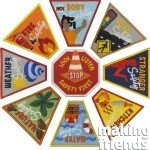
Includes nine 2″ Embroidered Patches and downloads. Print the requirements here and get your downloads from your order confirmation or from your account. Only patches will be mailed.

Suggestions for Younger Girl Scouts to Earn The Fire Safety Patch Program®
Earning this patch helps younger children understand the basics of fire prevention, what to do in an emergency, and how to stay calm and safe around fire hazards.
1. Watch this video about fire safety.
An educational video designed to teach children basic fire prevention and what to do in case of a house fire or a fire at school.
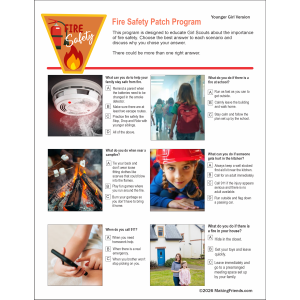
2. Complete the Fire Safety Worksheet
Print the fire safety worksheet from your order confirmation or download it from your account.
Read through each scenario with your girls and discuss the options provided. There may be more than one correct answer. Encourage your girls to come up with their own responses.
3. Master the “Stop, Drop, and Roll” Rule
The Rule: If your clothes ever catch on fire, do not run! Running makes the fire grow. Stop immediately, drop to the ground, cover your face with your hands, and roll back and forth until the fire is out.
Activity: Practice the exact motions in an open space. Have a leader yell “Stop, Drop, and Roll!” and have the children practice dropping down instantly and rolling safely.
4. Know Your Emergency Exit Plan: “Two Ways Out”
The Rule: Every room in a house or meeting space should have two ways to get out in case one is blocked by fire or smoke.
Activity: Walk around your meeting space or home. Identify the main door and a secondary exit (like a window or back door). Practice walking calmly to both exits.
5. Meet at the Safety Spot
The Rule: Once you are outside a burning building, you must stay outside and gather at a pre-planned family or troop meeting spot (like a specific tree, mailbox, or neighbor’s porch).
Activity: Take the group outside to designate a “Safe Meeting Spot.” Practice exiting the building and gathering at that exact spot. Once there, practice doing a quick “Headcount Check!”
Suggestions for Older Girl Scouts to Earn The Fire Safety Patch Program®
For older scouts, fire safety requires advanced situational awareness, home hazard mitigation, emergency coordination, and understanding outdoor/campfire management.For older scouts, nature safety requires advanced preparation, situational awareness, and the skills to handle unexpected physical hazards on the trail.
1. Watch this video about escaping a house fire.
This video uses a live, simulated smoke house to show how quickly a modern home fills with toxic smoke and demonstrates real-time escape tactics.
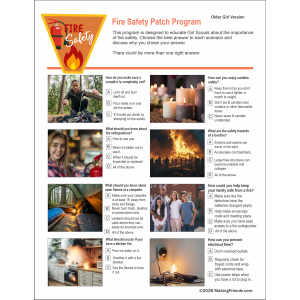
2. Complete the Fire Safety Worksheet
Print the fire safety worksheet from your order confirmation or download it from your account.
Read through each scenario with your girls and discuss the options provided. There may be more than one correct answer. Encourage your girls to come up with their own responses.
3. Conduct a Home Fire Hazard Inspection
- The Rule: The best way to survive a fire is to prevent it from ever starting.
- Activity: Download or create a home safety audit checklist. Inspect a home or meeting facility. Check the dates on smoke and carbon monoxide detectors, ensure testing buttons work, and verify that fire extinguishers are fully charged and unexpired.
4. Create a Formal Family Escape & Communication Plan
- The Rule: In a real emergency, panic sets in if there is no clear plan. Everyone in the household needs to know their role.
- Activity: Draw a grid map of your home showing all doors, windows, and two escape routes from each room. Choose an outside meeting place a safe distance from the home. Write down emergency contact numbers and assign who is responsible for helping pets or younger siblings.
5. Practice the Smoke Escape Crawl
- The Rule: Smoke is toxic and rises. The cleanest, coolest air during a structure fire is always closest to the floor.
- Activity: Create a mock smoke scenario using a sheet or low obstacles. Practice crawling on hands and knees (“Get low and go”) beneath the “smoke line.” Practice feeling closed doors with the back of your hand to check for heat before opening them.
6. Learn the Fire Extinguisher “P.A.S.S.” Method
- The Rule: Only attempt to fight a small, contained fire if you have a clear escape route behind you.
- Activity: Study the different types of fire extinguishers (Class A, B, C). Practice the P.A.S.S. acronym using an empty or training extinguisher:
- Pull the pin.
- Aim low at the base of the fire.
- Squeeze the lever.
- Sweep from side to side.
7. Master Campfire Safety & Extinguishment
- The Rule: An outdoor fire is not officially out until it is cold to the touch. Leftover embers can easily spark a wildfire.
- Activity: Learn how to clear a 10-foot safety circle around a campfire pit, away from overhanging branches and tents. Practice the proper way to extinguish a fire: Drown it with water, Stir the ashes with a shovel, Drown it again, and carefully test the heat with the back of your hand.
Suggestions for Younger Girl Scouts to Earn The Body Safety Patch Program®
1. Healthy safety starts with knowing yourself and trusting your gut.
This video will help younger scouts understand physical boundaries and gives them clear, non-scary language to identify safe versus unsafe interactions.
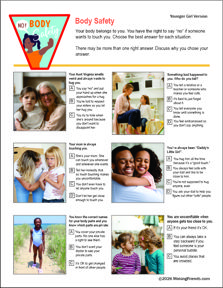
2. Complete the Body Safety Worksheet
Print the body safety worksheet from your order confirmation or download it from your account.
Read through each scenario with your girls and discuss the options provided. There may be more than one correct answer. Encourage your girls to come up with their own responses.
3. The “Uh-Oh” Feeling
Discuss what a “gut feeling” or “intuition” is. How does your body feel when you are uncomfortable or startled? (e.g., butterflies in the stomach, racing heart, tenseness). Practice saying out loud: “My feelings are important, and I have the right to feel safe.”
4. The Personal Bubble
Use a hula hoop, a piece of yarn, or just your arms stretched out to visualize your “personal space bubble.” Discuss who is allowed inside that bubble, when they are allowed, and how it feels when someone enters it without asking.
5. Learn and practice how to handle unwanted situations.
- The Power Voice: Practice using a firm, clear “Power Voice.” Unwanted attention often thrives on compliance. Roleplay making direct eye contact, holding up a stop-hand gesture, and saying loudly and clearly: “No,” “Back up,” “I don’t want to talk to you,” or “Leave me alone.”
- The “Broken Record” Technique: Sometimes people don’t listen the first time. Practice repeating the exact same firm boundary phrase over and over without arguing or making excuses.
- Roleplay Scenarios: In pairs or a troop setting, safely roleplay real-world scenarios. Examples: A stranger at the park keeps asking you questions; an older kid at school won’t stop following you around; someone you met playing an online game keeps asking what town you live in. Practice stepping in to help a friend who looks uncomfortable (bystander intervention).
6. Identify Your “Safety Squad”
With the help of a trusted adult, create a physical or digital index card listing at least three “Safety Squad” adults—trusted people you can contact immediately if you experience unwanted attention or harassment. Include their phone numbers and a secret “safety code word” you can text them if you need to be picked up immediately from a situation without explanation.
Suggestions for Older Girl Scouts to Earn The Body Safety Patch Program®
As you get older, unsafe or uncomfortable situations become more complex. They aren’t always about a “bad stranger”—sometimes it’s a friend pushing a boundary, an older kid at school making subtle comments, or an online interaction that starts to feel off.
1. Watch Boundaries & Consent 101
This video covers physical, emotional, and digital boundaries, offering concrete tips on how to handle real-world peer pressure and unwanted attention.
2. Decoding Your “Gut Feeling” (The Science of Intuition)
A “gut feeling” or intuition isn’t mystical—it is actually a rapid, subconscious survival mechanism. Your brain is constantly processing your surroundings, body language, tone of voice, and past experiences. When it detects an anomaly or potential danger before your conscious mind even has time to analyze it, it triggers your nervous system.
When you are uncomfortable, startled, or unsafe, your body speaks to you through physical signals. Pay close attention if you experience:
- The Urge: An immediate, overwhelming desire to leave the room, hang up the phone, or block a user.
- The Sudden Drop: A heavy, sinking feeling or “butterflies” in your stomach.
- The Spike: A suddenly racing heart, shallow breathing, or a wave of heat.
- The Freeze: Unexplained muscle tenseness, a tight jaw, or the hair standing up on the back of your neck.
Overriding the “Politeness Trap”
Teenagers—especially girls—are often socially conditioned to be polite, accommodate others, and avoid “making a scene” or appearing “rude.” Your safety and comfort will always be more important than someone else’s feelings. If someone makes you uncomfortable, you are under no obligation to be polite to them.
3. Complete the Body Safety Worksheet
Print the body safety worksheet from your order confirmation or download it from your account.
Read through each scenario with your girls and discuss the options provided. There may be more than one correct answer. Encourage your girls to come up with their own responses.

Types of Attention (Older Girls): Map out different types of attention: positive (compliments, friendly greetings), awkward (staring, over-friendliness from strangers), and negative/unwanted (catcalling, following, persistent messaging). Discuss where the line is crossed.
4. Identify Your “Safety Squad”
Your Safety Squad is an active network of trusted people who back you up as you navigate greater independence—whether you are at a high school party, driving with friends, at a mall, or hanging out online.
Who to include: A parent or guardian, an aunt/uncle, an older adult sibling, a trusted troop leader, or a friend’s parent.
The Rule: They must agree ahead of time that if you call or text for help, they will come get you or assist you first, and talk about the details later.
Establish an “X-Plan” or Secret Code Word
Sometimes you need to get out of a situation immediately, but you can’t say why because the person making you uncomfortable is standing right next to you. Set up a secret code with your Safety Squad.
- The “X” Plan: Texting just the letter “X” or a specific, completely random emoji (like 🍕 or 🦖) to anyone on your squad means: “Call me in 60 seconds with an ’emergency’ and tell me I need to come home right now,” or “Come pick me up at my current location immediately, no questions asked.”
- The Location Drop: Practice how to quickly drop your live location digitally via maps or safety apps to your squad members if you are on the move.
💡 Leader Note on Safety & Sensitivity
When facilitating this patch program, always emphasize that unwanted attention is never the victim’s fault, regardless of what they are wearing, where they are walking, or how they respond. Create a safe, non-judgmental space where girls feel secure sharing their experiences.
Suggestions for Younger Girl Scouts to Earn The Water Safety Patch Program®
1. Water Safety Starts with Knowing the Rules
Watch a kid-friendly video to understand the foundational rules of being around water—like never swimming alone and always asking an adult for permission before going near a pool, lake, or beach.
2. Complete the Water Safety Worksheet
Print the water safety worksheet from your order confirmation or download it from your account. Read through each scenario with your girls and discuss the options provided.
Encourage your girls to think about what they would do if a toy fell into the deep end or if a friend jumped in without a life jacket.
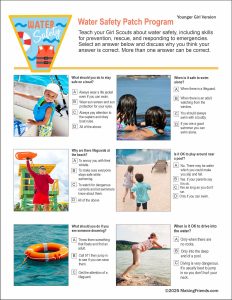
3. The “Look Before You Leap” Rule
Discuss the importance of checking your surroundings. How do you know if water is deep or shallow? What hidden dangers might be under the surface of a lake or river (rocks, branches, currents)? Practice saying out loud: “I always check with a grown-up and look at the water before I get in.”
4. The Personal Life Jacket (PFD)
Use a life jacket or PFD (Personal Flotation Device) to demonstrate proper fitting. Discuss when you are required to wear one (boating, docks, or if you aren’t a strong swimmer yet). Practice bucking it up and checking that it fits snugly by pulling up on the shoulders.
5. Learn and Practice How to Handle Unwanted or Unsafe Situations
- The Power Voice (No Dunking): Practice using a firm, clear “Power Voice” if someone is playing too rough in the pool. Roleplay making direct eye contact, holding up a stop-hand gesture, and saying loudly and clearly: “Stop,” “Don’t push me,” or “I need my space.”
- “Reach or Throw, Don’t Go”: Practice what to do if a friend is struggling in the water. Never jump in to save them, as they might accidentally pull you under. Practice the rule of reaching out with a pool noodle, a broom handle, or throwing a floaty/towel while yelling for an adult.
- Roleplay Scenarios: In pairs or a troop setting, safely roleplay real-world scenarios. Examples: A friend dares you to run on a slippery pool deck; someone asks you to swim in an area marked “No Lifeguard on Duty”; a pet jumps into a pond and looks like it’s struggling.
Suggestions for Older Girl Scouts to Earn The Water Safety Patch Program®
As you get older, water activities become more complex and independent. Hazards aren’t just about slipping on a pool deck—they involve managing peer pressure at beach parties, understanding open-water currents, recognizing the signs of active drowning, and knowing your personal swimming limits.
1. Watch Water Safety for Teens
Watch an educational video covering the differences between swimming in a pool versus open water, focusing on how to spot rip currents, handling sudden temperature drops, and resisting dangerous peer pressure around water heights (like bridge or cliff jumping).
2. the Science of Aquatic Danger (The Silent Threat)
Drowning isn’t mystical or loud—it is actually a rapid, silent physiological response. Media often portrays drowning as splashing and screaming, but the nervous system takes over to prioritize breathing, making it impossible for a struggling swimmer to call for help.
When you are around water, pay close attention if you notice someone showing these physical signals:
- The Silence: Hyperventilating or gasping, with the mouth sinking below and reappearing above the water line without time to speak.
- The Ladder Climb: Arms extended laterally, pressing down on the water to lift the mouth up, appearing as though they are trying to climb an invisible rope or ladder.
- The Vertical Freeze: Floating vertically in the water without supportive kicking or moving, often with eyes glassy, closed, or unfocused.
Overriding the “Politeness Trap”
Teenagers are often socially conditioned to stay quiet to avoid “ruining the fun” or making a scene if a friend jumps into a fast-moving river or deep quarry. Your safety and your friends’ lives will always be more important than someone else’s feelings. If a situation feels dangerous or beyond your skill level, speak up immediately or get a professional.
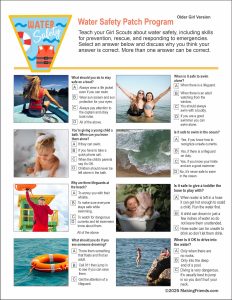
3. Complete the Water Safety Worksheet
Print the body safety worksheet from your order confirmation or download it from your account.
Read through each scenario with your girls and discuss the options provided. There may be more than one correct answer.
💡 Leader Note on Safety & Sensitivity
When facilitating this patch program, always emphasize that water accidents can happen to anyone, regardless of how strong a swimmer they think they are. Ensure a non-judgmental space where girls can honestly share their comfort levels with swimming and water activities.
Suggestions for Younger Girl Scouts to Earn The Stranger Safety Patch Program®
1. Recognizing True “Safety Adults” vs. Strangers
This video explains how people you don’t know well can seem very friendly but still be strangers you need to watch out for.
2. Complete the Stranger Safety Worksheet
Print the body safety worksheet from your order confirmation or download it from your account.
Read through each scenario with your girls and discuss the options provided. There may be more than one correct answer. Encourage your girls to come up with their own responses.
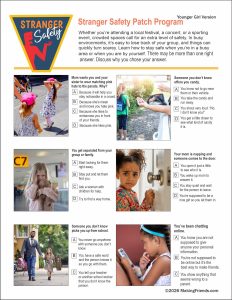
The Concept: A stranger is simply anyone your family doesn’t know well. They aren’t always mean-looking or scary; they can look friendly, have nice pets, or ask for help.
Discussion: Talk about the difference between a stranger and a Safety Adult (like a police officer, a store clerk with a nametag, or a teacher) you can approach if you ever get lost.
3. Body Signals
Discuss how your body reacts when something feels wrong. Do you get butterflies in your tummy? Does your heart beat fast? That is your body’s built-in alarm system.
Have the girls practice saying out loud: “I need to check with my adult first!” Make it a rule to always ask a parent or guardian before going anywhere, taking anything, or getting into a car with anyone.
4. Smart Online Safety
Keep Secrets Safe: Never tell an online game character or avatar your real name, your school, what town you live in, or your age.
The Screen Stop: If someone online asks you to send a picture, or says something that gives you the “Uh-Oh” feeling, immediately close the screen or turn the device over and tell an adult.
5. Practice Your “Power Actions”
No, Go, Yell, Tell: Roleplay four simple steps if a stranger approaches them at a park or on the street:
- NO: Say “No!” in a loud, firm voice.
- GO: Run away quickly toward a safe area or a Safety Adult.
- YELL: Yell loudly so others can hear: “This is not my parent!” or “Help!”
- TELL: Tell a trusted adult exactly what happened right away.
Suggestions for Older Girl Scouts to Earn The Stranger Safety Patch Program®
As you grow more independent, how you manage your personal safety changes. “Strangers” aren’t just people on the street—they are also individuals who try to bypass your digital boundaries, spam your social media, or interact with you in public places when you are out with friends.
1. Watch Being Safe Online
This video breaks down the fact that people online aren’t always who they say they are, details the red flags of digital manipulation, and explains how to handle online interactions that cross lines into uncomfortable territory.
3. Complete the Stranger Safety Worksheet
Print the body safety worksheet from your order confirmation or download it from your account.
Read through each scenario with your girls and discuss the options provided. There may be more than one correct answer. Encourage your girls to come up with their own responses.
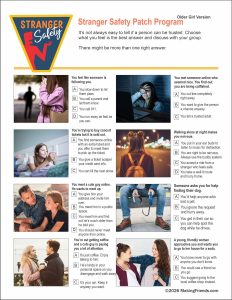
4. Deconstructing “Tricky Situations” & The Politeness Trap
The Trap: Older girls are often socially conditioned to be helpful, polite, and avoid making a scene. Disreputable people count on this.
The Rule: Your safety matters more than anyone else’s manners. If an adult you don’t know asks you for directions, asks you to come look at something, or makes persistent small talk that makes you uncomfortable, you have full permission to walk away, ignore them, or say “I can’t help you” and keep moving.
Situational Awareness (In Person)
- The Heads-Up Rule: When walking in public, navigating a mall, or waiting for a ride, keep your head up and eyes off your phone. Looking aware and confident makes you a much harder target.
- The Buddy System: Never walk away from a group or event alone. Agree with your friends ahead of time that you arrive together and leave together.
5. Digital Stranger Danger: Protecting Your Digital Footprint
- The Illusion of Anonymity: People online are not always who they say they are. A “14-year-old girl” in a gaming lobby or a comment section could easily be an adult stranger.
- Action Steps:
- Lock Down Privacy: Check your privacy settings on your gaming accounts and social platforms. Ensure strangers cannot see your location, school gear, or daily routines.
- The “Receipt” Test: Never send photos or information to anyone online that you wouldn’t want posted on a billboard in front of your school.
- The Stranger Filter: Treat friend requests or direct messages (DMs) from people you do not know in real life as a boundary cross. Block and report persistent or inappropriate accounts immediately.
5. Build Your Active “Safety Squad” & Emergency Codes
The Network: Identify 3 trusted adults who agree to be part of your safety network.
The X-Plan: Establish a secret code word or a specific emoji (like 🚫 or 🚗) with your parents or Safety Squad. If you text them this code, it means: “Call me right now with a fake emergency so I have an excuse to leave,” or “Come pick me up immediately, no questions asked.”
💡 Leader Note on Safety & Sensitivity
When hosting a Stranger Safety meeting, avoid using scare tactics that make girls afraid of the outside world. Instead, focus on empowerment, boundary-setting, and building a toolkit of actionable responses. Always emphasize that if an uncomfortable situation occurs, it is never the girl’s fault.
Suggestions for Younger Girl Scouts to Earn The Nature Safety Patch Program®
Earning this patch helps younger girls explore the great outdoors while learning how to stay safe, respect wildlife, and look out for one another.
1. Watch this video about staying safe outdoors.
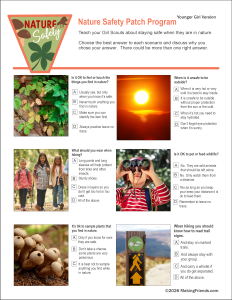
2. Complete the Nature Safety Worksheet
Print the nature safety worksheet from your order confirmation or download it from your account.
Read through each scenario with your girls and discuss the options provided. There may be more than one correct answer. Encourage your girls to come up with their own responses.
2. Buddy Up
The Rule: Always use the buddy system when exploring nature—never wander off alone. If you ever realize you are separated from your group, freeze like a tree, stay in one place, and blow your safety whistle or yell for help.
Activity: Pair the girls up into “Safety Buddies”. Play a game or go on a short walk where partners must stay within arm’s reach of each other the entire time. Practice yelling “Buddy Check!” where pairs must find each other and raise their hands.
3. Know the “Stay Put” Rule
The Rule: If you ever accidentally get separated from your buddy or the group, do not keep walking to look for them.
Activity: Teach the girls to “Freeze like a tree.” Practice standing in one place, blowing a safety whistle three times, or calling out loudly until a leader or adult finds them.
4. Respect Wildlife from a Distance
The Rule: Animals in nature are beautiful but wild. Never approach, feed, or try to touch any wildlife, no matter how small or cute they look.
The Thumb Trick: Teach the girls the “Rule of Thumb”: Hold your thumb out at arm’s length, close one eye, and try to cover the animal with your thumb. If you can still see the animal around your thumb, you are too close and need to take a few steps back!
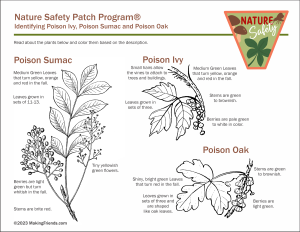
5. Know Your Plants: “Leaves of Three, Let It Be”
The Rule: Some plants can cause itchy rashes or tummy aches. Never touch plants you don’t know, and never eat wild berries or mushrooms.
Activity: Download the worksheet with pictures of poison ivy, poison oak, and poison sumac. Have the girls read about them and color them. Have the girls practice chanting: “Leaves of three, let it be!“
Suggestions for Older Girl Scouts to Earn The Nature Safety Patch Program®
For older scouts, nature safety requires advanced preparation, situational awareness, and the skills to handle unexpected physical hazards on the trail.
1. Watch this video about staying safe outdoors.
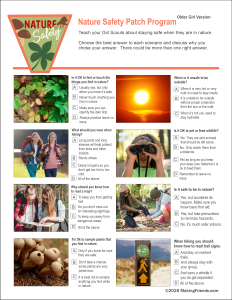
2. Complete the Nature Safety Worksheet
Print the nature safety worksheet from your order confirmation or download it from your account.
Read through each scenario with your girls and discuss the options provided. There may be more than one correct answer. Encourage your girls to come up with their own responses.
3. Build a Wilderness First Aid Kit
- The Rule: You must be prepared to handle minor injuries and environmental hazards on your own when away from immediate help.
- Activity: Assemble a portable trail first aid kit. Learn the purpose of each item, focusing heavily on items specific to nature safety: tweezers (for tick removal), blister pads/moleskin, antiseptic wipes, and hydrocortisone cream for plant rashes.
4. Recognize Poisonous Plants & Pests
- The Rule: Spotting hazards before you touch them is the best way to prevent trail misery.
- Activity: Study local wilderness hazards. Learn how to identify poison ivy, oak, and sumac in your region. Practice identifying tick-heavy habitats (like tall brush) and how to do a thorough “tick check” on your clothes and body after being outdoors.
5. Master Emergency Signaling & Navigation
- The Rule: Cell service fails in dense woods or canyons. You must know how to signal for help without a phone.
- Activity: Learn the universal outdoor distress signals (three whistle blasts, three flashes of a flashlight, or three bright markers placed in a triangle). Practice using a physical compass to orient yourself toward a safety checkpoint.
6. Create an Emergency Trip Plan
- The Rule: If an emergency happens, people at home need to know exactly where to send search and rescue.
- Activity: Before heading out on a hike, fill out a formal trail plan detailing your group’s exact route, your expected start and return times, and emergency contact numbers. Leave this document with a trusted adult at home before setting foot on the trail.
7. Wilderness First Aid & Environmental Hazards
- The Rule: Know how to identify, prevent, and treat common outdoor ailments like dehydration, heat exhaustion, hypothermia, and tick bites.
- Activity: Create a mock outdoor emergency scenario. Have the girls practice checking each other for ticks (focusing on hidden spots like ankles and behind ears), treating a simulated blister, and recognizing the early warning signs of heat stroke.
8. Wildlife Encounters and Trail Etiquette
- The Rule: Know how to share the trail safely with both human visitors and local wildlife (such as snakes, bears, or stinging insects depending on your region).
- Activity: Research the specific wildlife hazards in your area. Roleplay what to do if you encounter a snake on the trail (give it space and walk around) or a large predator (make yourself look big, make loud noises, and never run).
Suggestions for Younger Girl Scouts to Earn The Weather Safety Patch Program®
Earning this patch helps younger girls understand different types of weather, learn how to read nature’s warning signs, and know exactly what to do to stay safe and calm during a storm.
1. Watch this video about staying safe outdoors.
knowing the difference between a sunny day and a changing sky, and always listening to a grown-up when it’s time to head indoors.
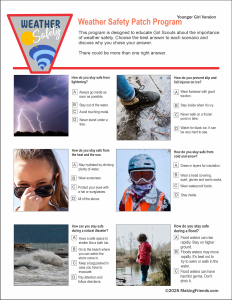
2. Complete the Weather Safety Worksheet
Print the weather safety worksheet from your order confirmation or download it from your account.
Read through each scenario with your girls and discuss the options provided. There may be more than one correct answer. Encourage your girls to come up with their own responses.
3. The “When Thunder Roars, Go Indoors” Rule
Encourage your girls to think about what they would do if they heard thunder while playing at the park or if the wind started blowing very hard.
Discuss the importance of checking your surroundings when outside. How do you know a storm is coming? What hidden dangers come with lightning and rain? Practice saying out loud: “When thunder roars, I go indoors!” and remember that a sturdy building or a car is the safest place to be.
4. Packing a “Just-In-Case” Daypack
Use a small backpack to demonstrate how to prepare for unexpected changing weather during an outdoor activity. Discuss essential items to bring (a light rain poncho, an extra layer, sun protection, and a whistle). Practice packing it up and ensuring it fits comfortably.
5. Learn and Practice How to Handle Unexpected Weather Situations
The Safe Crouch (If Caught Outside): Practice the “lightning crouch” just in case they are ever stuck in an open area with no shelter. Roleplay dropping to the knees, balling up low to the ground, tucking the head, and covering the ears to minimize contact with the ground.
“Turn Around, Don’t Drown”: Practice what to do if heavy rain causes flooding on a path or sidewalk. Never walk through moving water, as it can be deceptively deep and strong. Practice the rule of stopping, turning around, and finding a safe, high path while alerting an adult.
Roleplay Scenarios: In pairs or a troop setting, safely roleplay real-world scenarios. Examples: You are swimming and hear a low rumble of thunder; a sudden heavy downpour starts during a backyard game; the sky turns an unusual dark green color while you are out on a walk.
Suggestions for Older Girl Scouts to Earn The Weather Safety Patch Program®
For older scouts, weather safety requires reading wilderness weather signs, how topography affects storms (like flash floods in canyons or lightning risks on ridgelines), and how to monitor forecasts before heading into cell-service dead zones.
1. Watch this video about staying safe outdoors.
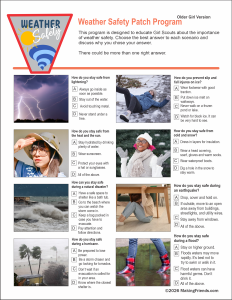
2. Complete the Weather Safety Worksheet
Print the weather safety worksheet from your order confirmation or download it from your account.
Read through each scenario with your girls and discuss the options provided. There may be more than one correct answer. Encourage your girls to come up with their own responses.
3. The Science of Atmospheric Danger (The Rapid Shift)
Dangerous weather shifts aren’t always slow—they can be rapid, catching hikers or campers completely off guard. Conditions like microbursts, flash floods, or sudden lightning strikes require immediate, decisive action.
When you are outdoors, pay close attention if you notice these environmental signals:
- The Temperature Drop: A sudden, sharp plunge in temperature and a swift shift in wind direction often signal an approaching gust front or severe thunderstorm cell.
- The Anvil Cloud: A tall, cumulonimbus cloud flattening out at the top indicates a mature, high-energy storm system capable of lightning and severe wind moving into your area.
- The Flash Flood Trigger: Heavy rain upstream can cause river levels miles away to rise rapidly without warning. Watch for water turning muddy, carrying sudden debris, or rising along the banks.
The Safety Mentality: Older scouts are often tempted to ignore early warning signs to finish a trail, reach a summit, or avoid delaying a group trip. Your safety and your group’s lives will always be more important than sticking to an itinerary. If a weather front looks dangerous or conditions exceed your gear’s limits, turn back or seek shelter immediately.
4. Master Emergency Signaling & Navigation
- The Rule: Cell service fails during severe weather, in dense woods, or in deep canyons. You must know how to signal for help without a phone.
- Activity: Learn the universal outdoor distress signals (three whistle blasts, three flashes of a flashlight, or three bright markers placed in a triangle). Practice using a physical compass to orient yourself toward a safety checkpoint if visibility drops due to heavy rain, fog, or snow.
5. Master Emergency Signaling & Navigation
- The Rule: Cell service fails in dense woods or canyons. You must know how to signal for help without a phone.
- Activity: Learn the universal outdoor distress signals (three whistle blasts, three flashes of a flashlight, or three bright markers placed in a triangle). Practice using a physical compass to orient yourself toward a safety checkpoint.
6. Recognize Extreme Temperature Hazards
- The Rule: Know how to identify, prevent, and treat common weather-related ailments like dehydration, heat exhaustion, and hypothermia.
- Activity: Create a mock outdoor emergency scenario. Have the girls practice recognizing the early warning signs of heat stroke (hot, dry skin or confusion) versus hypothermia (uncontrolled shivering, slurred speech). Practice pitching an emergency bivvy or space blanket to protect someone from extreme wind and wet weather.
7. Wilderness First Aid & Environmental Hazards
- The Rule: Know how to identify, prevent, and treat common outdoor ailments like dehydration, heat exhaustion, hypothermia, and tick bites.
- Activity: Create a mock outdoor emergency scenario. Have the girls practice checking each other for ticks (focusing on hidden spots like ankles and behind ears), treating a simulated blister, and recognizing the early warning signs of heat stroke.
8. Create a Weather-Ready Emergency Trip Plan
- The Rule: If severe weather traps you, people at home need to know exactly where you are to send search and rescue.
- Activity: Before heading out on a hike, fill out a formal trail plan detailing your group’s exact route, your expected start and return times, and emergency backup routes in case of trail flooding. Leave this document with a trusted adult at home before setting foot on the trail.