Kitchen Safety Patch Program®
Iron on! 2″ Embroidered Patch.
The Kitchen Safety Patch Program® is designed to teach scouts how to navigate the heart of the home with confidence, care, and a sharp eye for potential hazards. From younger girls mastering the “safe zone” around hot stoves to older scouts practicing advanced culinary knife handling and foodborne illness prevention, this program builds a lifelong culture of safety in the kitchen.
- Includes targeted, age-appropriate downloadable worksheets for both Younger and Older Girl Scouts.
- Perfect for your next troop cooking meeting, holiday baking session, or outdoor camp culinary challenge!

Suggestions for Younger Girl Scouts to Earn The Weather Safety Patch Program®
Earning this patch helps younger girls understand the rules of a safe kitchen, learn how to handle tools under supervision, and know exactly what to do to prevent accidental burns or spills.
1. Watch this video about staying safe in the kitchen
This video is fun, highly engaging, and specifically designed for a camp or club setting. It perfectly addresses safe hand-washing habits, setting up a clean-up station, and basic kitchen navigation.
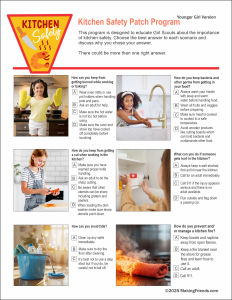
2. Complete the Kitchen Safety Worksheet
Print the kitchen safety worksheet from your order confirmation or download it from your account. Read through each scenario with your girls and discuss the choices. Encourage them to spot the “hidden hazards” in the pictures (like a towel too close to a burner!).
3. The “Handles In, Safe Zone” Rule
Encourage your girls to think about what could happen if a pot handle is sticking out over the edge of the stove. Discuss the importance of keeping a 3-foot “safe zone” around hot appliances. Practice checking your surroundings and saying out loud: “Pots and pans stay turned inside, keeping hands safe on every side!”
4. Assembling the Chef’s Clean-Up Station
Use a kid-friendly setup to demonstrate proper hygiene. Discuss the essential steps before cooking: tie back long hair, roll up long sleeves, remove dangling jewelry, and scrub hands with warm water and soap for a full 20 seconds (the length of the “Happy Birthday” song twice!).
5. Learn and Practice How to Handle Unexpected Kitchen Situations
The Spill Drill: Practice what to do immediately if liquid drops on the floor. Roleplay announcing “Spill on the floor!” out loud so others don’t slip, and grab a towel to dry it immediately under adult supervision.
The “Stop and Ask” Rule for Knives: Practice the safe way to hand someone a kitchen tool (like a spoon or a butter knife)—handle first, never blade first. Emphasize that sharp knives are for grown-ups or require direct adult guidance.
Roleplay Scenarios: In pairs or a troop setting, safely roleplay real-world scenarios. Examples: You see smoke coming from the toaster; you accidentally drop a piece of food on the floor while chopping; you want to reach something on a high shelf above the stove.
Suggestions for Older Girl Scouts to Earn The Kitchen Safety Patch Program®
For older scouts, kitchen safety transitions into mastering proper knife techniques, managing high-heat appliances, understanding how to handle different types of fires, and safely storing food during campouts or large group events.
1. Watch this video about staying safe in the kitchen.
Chefs compete to see who’s got the chops when it comes to restaurant safety. Learn how to avoid common kitchen injuries, including burns and cuts, muscle strains and falls, and hazardous chemicals and equipment.
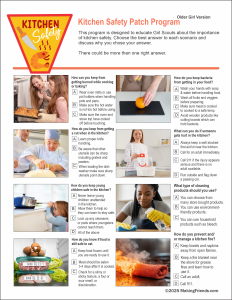
2. Complete the Weather Safety Worksheet
Print the advanced kitchen safety worksheet from your order confirmation or download it from your account. Work through real-world culinary scenarios, analyzing hazards in commercial vs. home kitchens.
3. The Science of Foodborne Pathogens (The Danger Zone)
Bacteria can multiply rapidly if food is left out. Conditions between 40°F and 140°F are known as the Danger Zone. When preparing or storing food, pay close attention to these rules:The Two-Hour Rule: Never leave perishable food out at room temperature for more than two hours (or one hour if it’s hot outdoors at camp).
Separate, Don’t Cross-Contaminate: Always use separate cutting boards and knives for raw meats and ready-to-eat foods like vegetables or bread.
The Safety Mentality: Older scouts are often tempted to skip steps to speed up cleanup or save leftovers that have been sitting out too long. Your troop’s health is always more important than avoiding food waste. If you aren’t sure a food was kept at a safe temperature, remember: When in doubt, throw it out.
The Safety Mentality: Older scouts are often tempted to ignore early warning signs to finish a trail, reach a summit, or avoid delaying a group trip. Your safety and your group’s lives will always be more important than sticking to an itinerary. If a weather front looks dangerous or conditions exceed your gear’s limits, turn back or seek shelter immediately.
4. Master Emergency Fire Safety & Suppression
- The Rule: Water should never be used on a grease fire—it will cause the fire to explode violently.
- Activity: Learn the “Smother” technique. Practice handling a large pot lid or baking sheet to safely slide over a simulated pan fire to cut off the oxygen supply. Discuss when to use baking soda (never flour!) and locate the fire extinguisher in your kitchen space, reviewing the P.A.S.S. method (Pull, Aim, Squeeze, Sweep).
5. Master Knife Control and Maintenance
- The Rule: A dull knife is actually more dangerous than a sharp one because it requires more pressure and is more likely to slip.
- Activity: Practice the “Bear Claw” grip to keep your fingertips safely tucked under while slicing. Learn the proper way to walk with a knife (pointed down by your side, blade facing backward) and how to verbally alert others by saying “Knife behind!” when moving through a busy kitchen.
6. Prevent and Treat Minor Kitchen Injuries
- The Rule: Know how to identify and quickly respond to minor burns, steam scalds, or small finger cuts.
- Activity: Create a mock kitchen first-aid drill. Practice running a simulated burn under cool, clean water for at least 10–15 minutes (never apply butter or ice!). Practice cleaning and dressing a mock finger cut using a troop first aid kit.
7. Create a Safety Plan for Camp or Event Cooking
- The Rule: Cooking outdoors or over an open fire introduces unique hazards like wind shifts, unstable surfaces, and wildlife.
- Activity: Before your next campout or large troop dinner, fill out a formal kitchen setup plan detailing where hot stoves or fuel will be securely placed, where the dishwashing station will sit to prevent animal attraction, and who is assigned to monitor fire safety at all times.